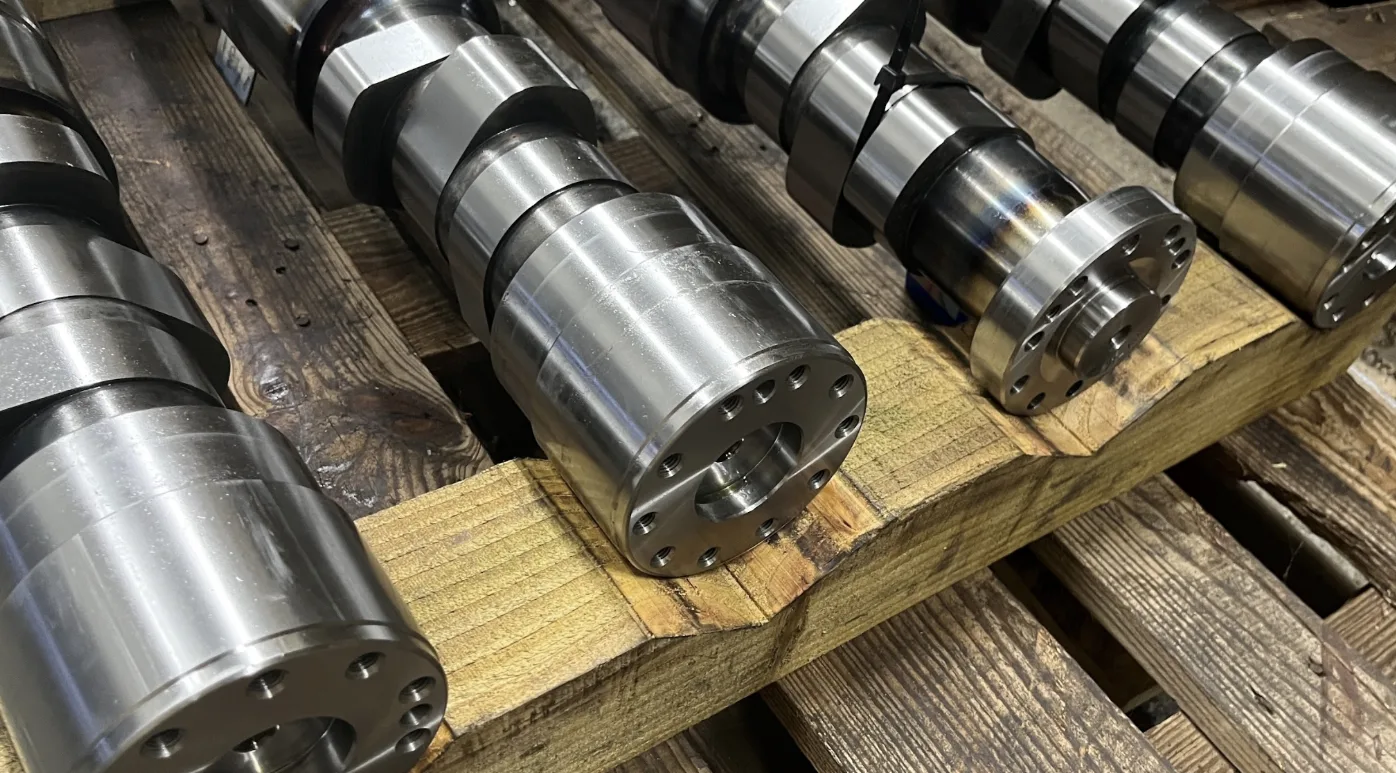
CNC machining is one of the most reliable and versatile manufacturing methods available, and it’s central to how Polgain produces precision components every day.
CNC stands for Computer Numerical Control. Rather than relying on manual operation, the machine follows a programmed set of instructions to cut and shape material to exact specifications. The result is consistent, repeatable, and traceable, which matters when components need to perform reliably in demanding applications.
Here’s a closer look at why CNC machining is the method of choice for precision engineering work.
Precision and accuracy
CNC machines work directly from digital design data, guiding cutting tools to exact coordinates with no manual interpretation required.
This removes the variability introduced by hand operation and allows tolerances to be held consistently down to fractions of a millimetre. This is important for components where even minor deviations can affect machine performance.
Repeatability across production runs
Once a program is set, every part produced from it is effectively identical. This makes CNC machining well suited to batch production and quality control. It also means that if the same component is needed months or years later, it can be reproduced to the same specification, regardless of who originally set up the job.
Ability to produce complex geometries
CNC machining can produce profiles and geometries that would be extremely difficult to achieve through manual methods. This is particularly relevant to cam manufacture, where accurate profile generation is critical to machine timing and performance.
CNC processes also typically produce clean surface finishes, reducing the need for secondary operations.
Reduced risk of human error
Programmed cutting paths remove many of the variables that can affect manual machining, such as inconsistent feeds, misaligned drilling, or errors introduced through fatigue. Once a program is proven, it can run the same operation across hundreds of parts with consistent results.
It’s worth noting that human input still matters at the setup stage. Programming errors or incorrect tooling can cause problems. Getting that initial setup right is where engineering experience counts.
Flexibility across materials
CNC machining works across a wide range of engineering materials, including:
- Aluminium alloys
- Stainless steel
- Mild steel
- Brass and copper
- Titanium
- Engineering plastics (including Acetal, PEEK, and Nylon)
Changing between materials or operations is relatively straightforward, with tool changers allowing quick transitions between runs and software updates taking minutes rather than hours.
Scalability from one-off to batch
The same CNC process supports single prototype parts and larger repeat batches without significant retooling. This flexibility is useful for customers who need a one-off replacement component as well as those requiring ongoing batch production, both of which are common requirements in machine build and refurbishment work.
CNC machining at Polgain
CNC machining sits at the core of how we manufacture cams, camshafts, and precision components for machine builders across a range of industries.
Combined with our grinding capability and reverse engineering experience, it allows us to produce accurate, consistent parts, whether working from customer drawings, digital data, or physical samples.
If you’d like to discuss a requirement, call us on 01502 532880 or get in touch via our contact form.