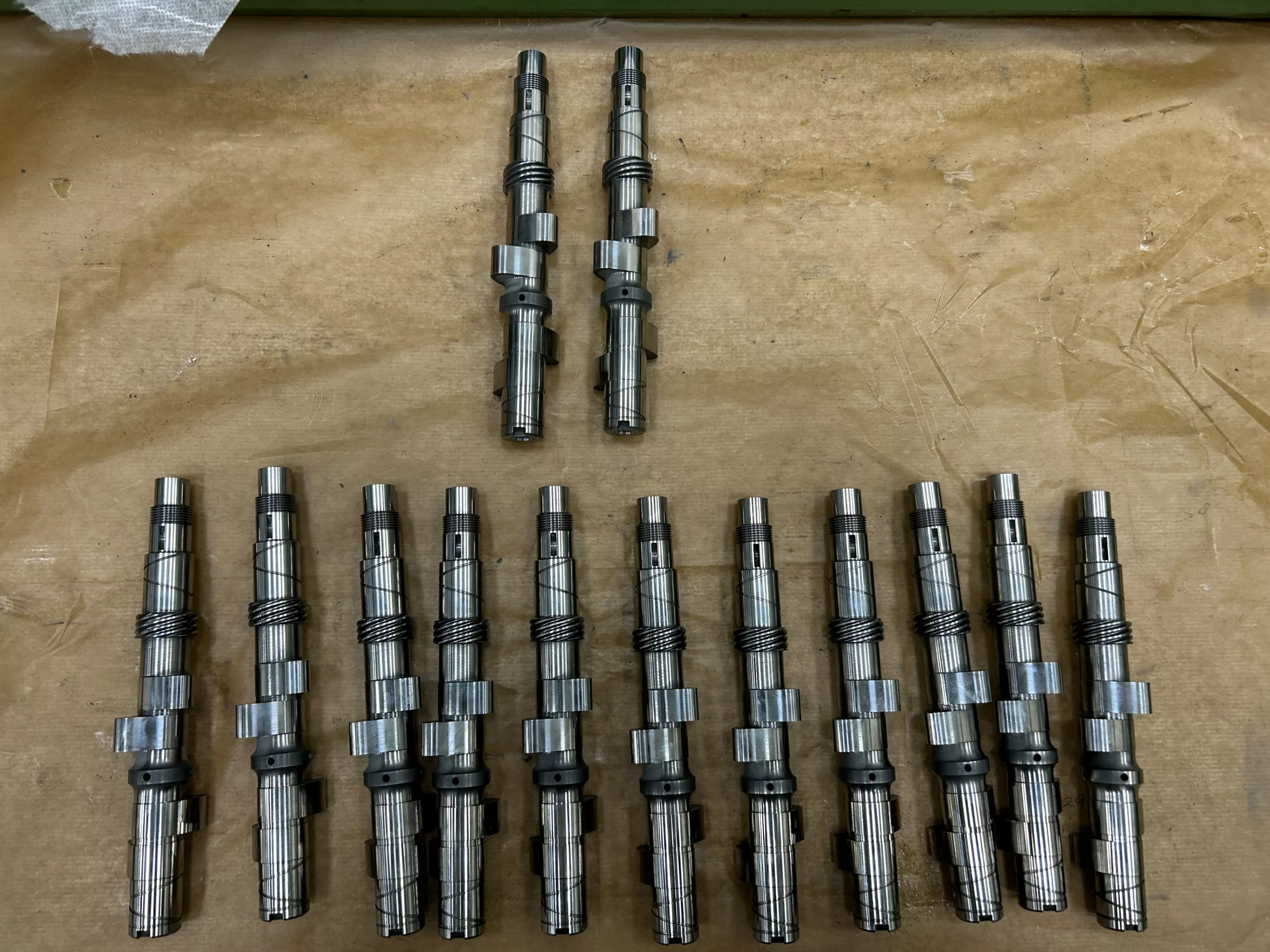
Andover Norton, specialists in parts for classic Norton motorcycles, approached Polgain after persistent camshaft issues in Norton Commando engines.
Historically, Norton camshafts had been produced using chill cast iron. However, as production quantities reduced over time, chill iron castings were no longer a viable manufacturing option.
Alternative materials and manufacturing routes had been introduced, but these had not delivered the reliability required.
The customer was finding significant wear on cam lobes and, in some cases, complete camshaft failures. Some units had suffered severe lobe damage while others had snapped entirely in service.
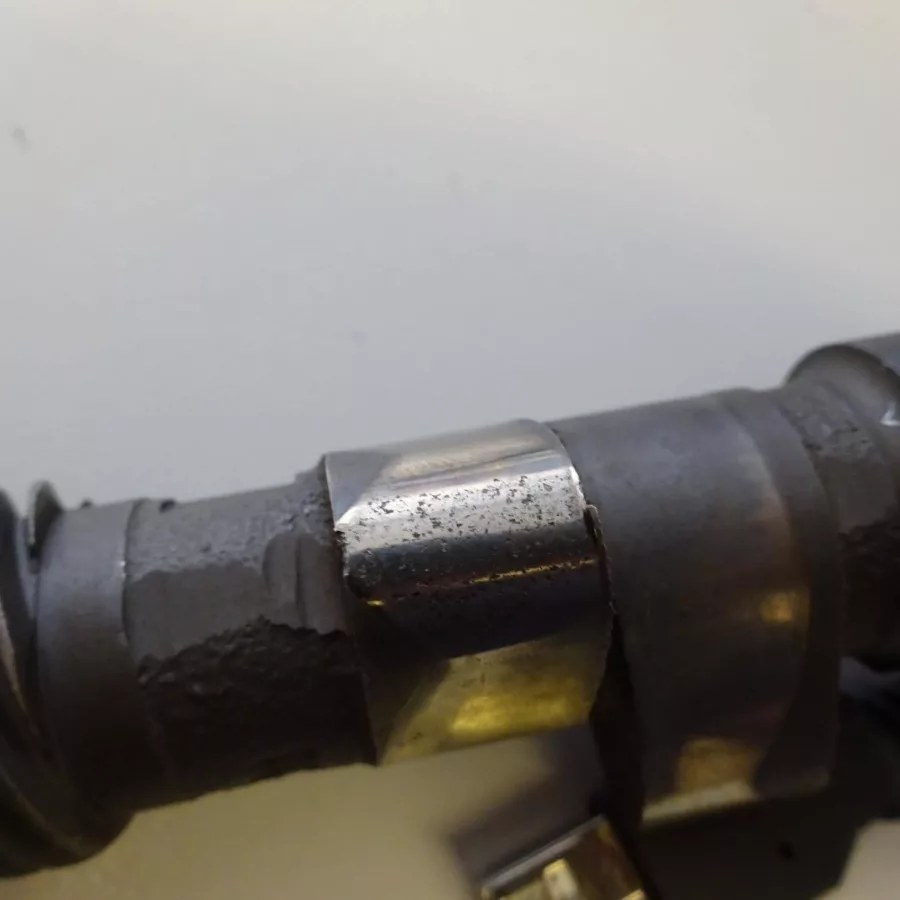
The problem was compounded by the demanding operating characteristics of the Norton Commando “combat” engine. At lower engine speeds the cam lobes experience very high loading at the nose, while at higher speeds the flat-faced follower can lift from the lobe and impact on the closing side of the cam.
With unclear material specifications and uncertainty about the best manufacturing method, Andover Norton needed a reliable long-term solution. That is why they came to Polgain.
The Solution
Polgain reviewed the available information, including material specifications, historical drawings and the known operating characteristics of the Norton Commando valve train.
It was identified that the material previously used by suppliers, a form of Grade 17 cast iron with added chromium, was unlikely to provide the required hardness and durability for this application. Unlike chill cast iron, Grade 17 cast iron cannot be hardened through heat treatment, limiting its suitability for high-load camshaft applications.
Drawing on extensive experience in camshaft design and manufacture, Polgain recommended an alternative production approach based on more suitable materials and processes. Options such as EN36 and EN40 nitriding steels were evaluated, both of which are capable of delivering the surface hardness and wear resistance required for heavily loaded cam profiles.
The recommended route focused on selecting a material capable of supporting deep surface hardening while maintaining core strength. This approach allowed the cam lobes to withstand the high contact stresses generated by the Norton valve train while reducing the risk of cracking or snapping under load.
Polgain also considered the wider system, including valve spring pressures and follower design. These factors directly affect camshaft loading and long-term durability.
The Outcome
Following Polgain’s recommendations, a revised manufacturing route was implemented for the Norton Commando camshafts.
The improved material selection and heat treatment approach delivered a far more reliable component capable of withstanding the demanding operating conditions of the engine.
Issues once seen with heavy lobe wear and camshaft failure were fixed, giving customers a durable, dependable solution.
Polgain’s production method has been used for many years. It still provides a stable, trouble-free supply of camshafts for this classic motorcycle platform.